Decide What You Want the Motor to Do
Before choosing a kayak motor, think about what you want it to improve. Are you looking for more speed between fishing spots, or better control once you get there? That is the starting point for the bow-mount versus stern-mount decision. Both arrangements can move a kayak and help you fish, but their strengths are different. Stern-mounted systems generally appeal to anglers who prioritize speed and shallow-water access. Bow-mounted systems appeal to anglers who want precise positioning and boat control. At Ketch, we lean toward bow mounting for the inland-lake fishing we do. That does not make it the right answer for every kayak or every angler. The better choice depends on where you fish, how you move through the water, and what you need the motor to do throughout the day.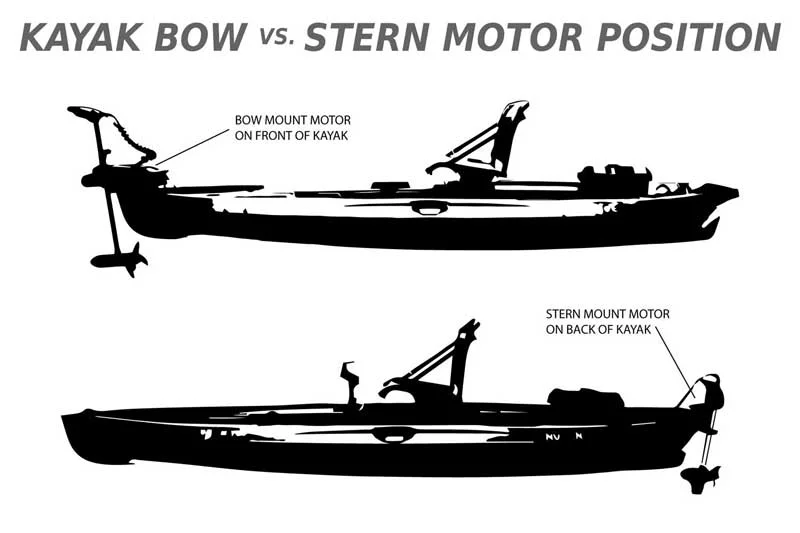
Stern Mounting Favors Speed
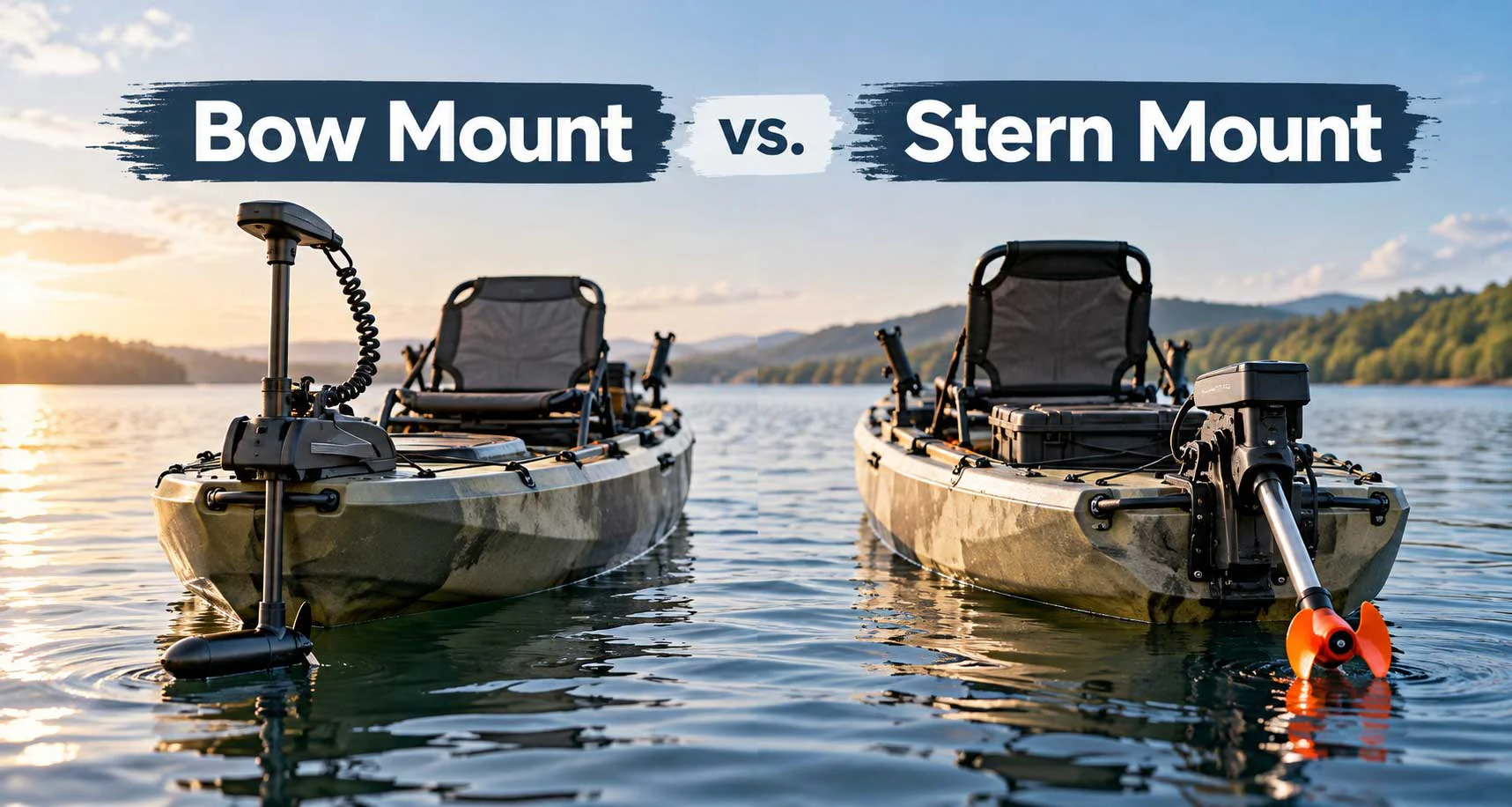
A stern-mounted motor pushes the kayak from behind. In our experience with comparably powered kayak setups, stern systems can be roughly 15 to 20 percent faster than bow-mounted systems. Treat that as an observation from the setups we know, not a guaranteed result for every motor and hull combination. That speed can be attractive when you want to move quickly between areas. Stern mounting can also leave the bow clear, although the motor, steering, controls, and battery still need to fit into the overall layout. River anglers often favor this arrangement. Depending on the motor and installation, a stern system can operate shallower than a typical bow-mounted trolling motor. Check the actual operating depth, tilt arrangement, and obstruction clearance of the setup you are considering. Shallow-water capability does not make a propeller immune to rocks or submerged timber.Bow Mounting Favors Boat Control
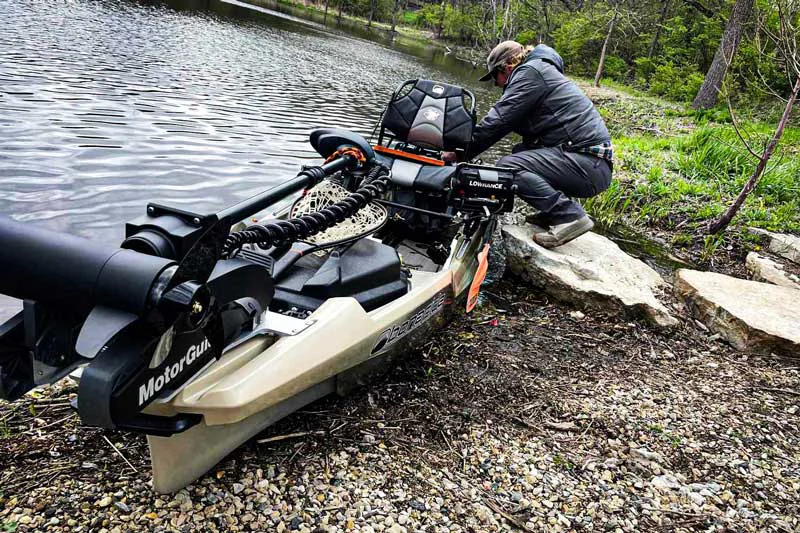
A bow-mounted motor pulls from the front of the kayak. For anglers working offshore structure, holding a casting position, or making repeated presentations to a small target, that control can matter more than top speed. The bow motors discussed here offer GPS position holding. Minn Kota calls its feature Spot-Lock; other manufacturers use their own names. Instead of continually correcting your position by hand, you can let the motor make those adjustments while you concentrate on fishing. Bow steering also gives you a responsive way to turn the kayak. On a compatible setup, you retain the use of the kayak’s rudder to help manage tracking and orientation while underway. The motor and rudder give you separate ways to influence how the boat moves. This is why we favor bow mounting for many inland-lake builds. If you spend much of the day fishing a point, ledge, or offshore target, staying in the right position can be more useful than getting to the next spot a little faster.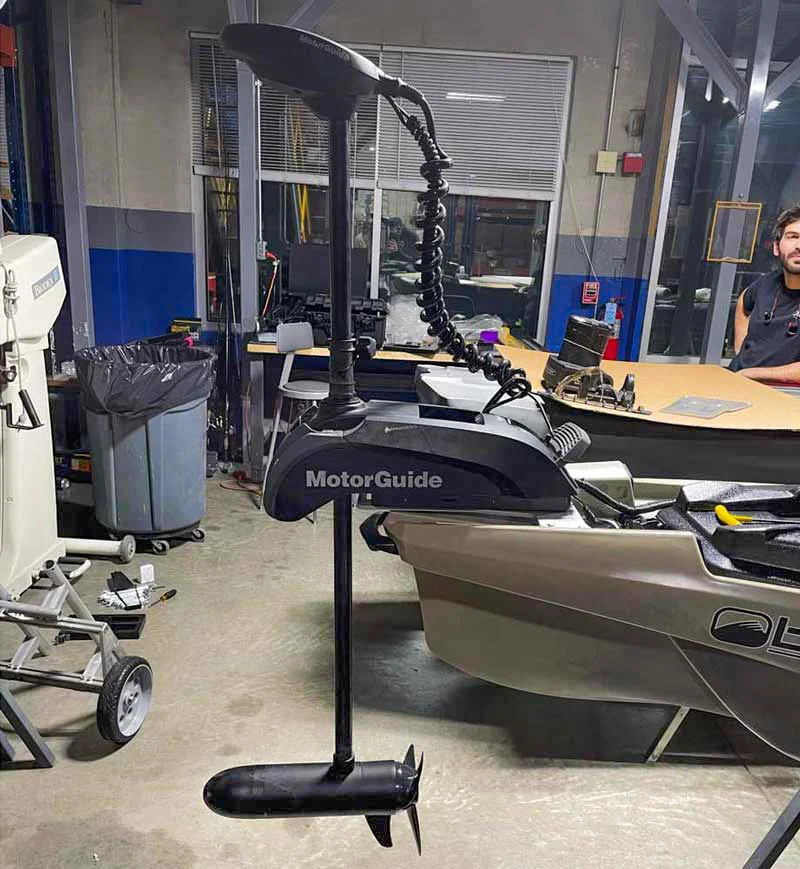
Bow-Mounted Motors Worth Considering
The Minn Kota Terrova in the 12V, 55-pound-thrust configuration is a common starting point in the kayak builds we discuss. It offers GPS positioning without requiring the higher-voltage battery arrangement of some larger motors. Check the exact model, shaft length, and mounting requirements against your kayak. The Lowrance Recon is our preferred premium option for its combination of power, weight, and control. It supports 24V or 36V operation and GPS anchoring. It is a substantial investment, so compare the complete installation cost, including the battery and mounting hardware, rather than looking only at the motor. The Power-Pole MOVE and Garmin Force Kraken also belong in the discussion, particularly for very large fishing platforms. We would generally reserve them for the larger end of the kayak category, where the hull and mounting arrangement can accommodate their size and installed load. More motor is not automatically a better fit for a kayak. Compare specific configurations rather than entire product families. Shaft length, mount design, battery requirements, and the space needed to stow and deploy the motor all affect whether a particular model makes sense.Stern-Mounted Motors Have Different Tradeoffs
The Newport NK180 and NK300 are entry-level options that appeal to price-conscious anglers. The ability to select a compatible third-party battery is another attraction. Our reservations about these motors come from noise and reliability concerns in our experience. They remain options to consider when initial cost is the deciding factor, but price should not be the only comparison. The Torqeedo Ultralight 1103 represents a premium system approach. Its dedicated battery is part of the package to evaluate, including the cost of replacement or additional capacity. Some anglers value a matched system; others prefer more freedom in battery selection. The ePropulsion kLite750 brings another approach, with a battery integrated into the motor. We see that as a useful convenience for short outings, rather than something to assume will cover a full fishing day. For longer trips, consider the supported range-extension arrangement. ePropulsion describes an optional kit that recharges the internal battery from a compatible external 12V battery. Verify kit availability and the exact battery requirements before planning the build. External charging through that system is different from connecting an arbitrary battery directly to the motor.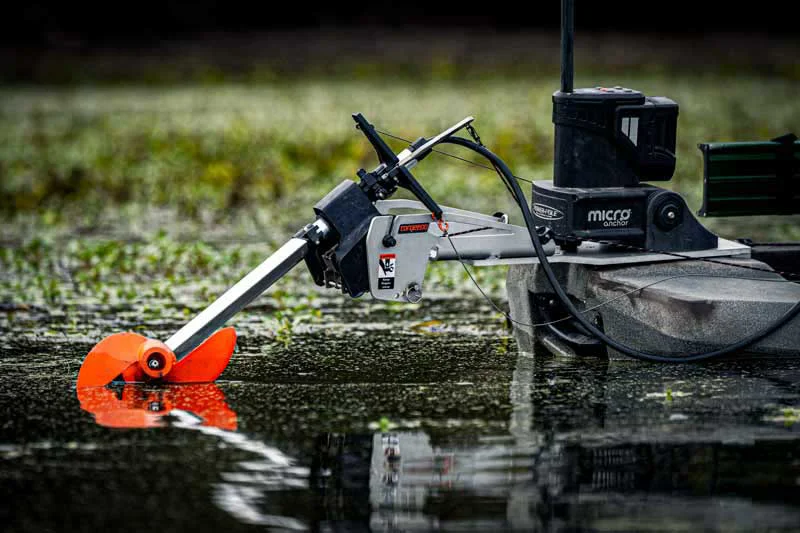
Garmin Force Current Changes the Stern-Mount Comparison
The Garmin Force Current deserves separate attention because it brings GPS position holding to a stern-mounted kayak motor. That makes it an important exception to the usual comparison between stern propulsion and bow-mounted positioning. Garmin also documents a Bow Lock mode that holds the position of the bow while allowing the stern to move. If GPS control is important but you prefer a stern installation, look closely at how its modes operate and how they suit your fishing. Do not assume every position-holding system will orient or move the kayak in the same way. The behavior matters as much as the feature name.More Speed Does Not Automatically Mean More Range
Keep speed and range separate when comparing motors. Range depends on the energy available, the power consumed, and how much distance you cover while using that energy. Hull, load, wind, current, and throttle choices all affect the result. In our experience, stern-motor anglers often use the available speed and spend more time running hard. Bow-motor anglers frequently travel more slowly and prioritize control while fishing. Those habits can produce very different battery requirements, even before comparing the motors themselves. Plan around your likely use. A fast trip across the lake, several hours of position holding, and a slow shoreline approach place different demands on the battery. Top speed alone will not tell you whether a system can support your day.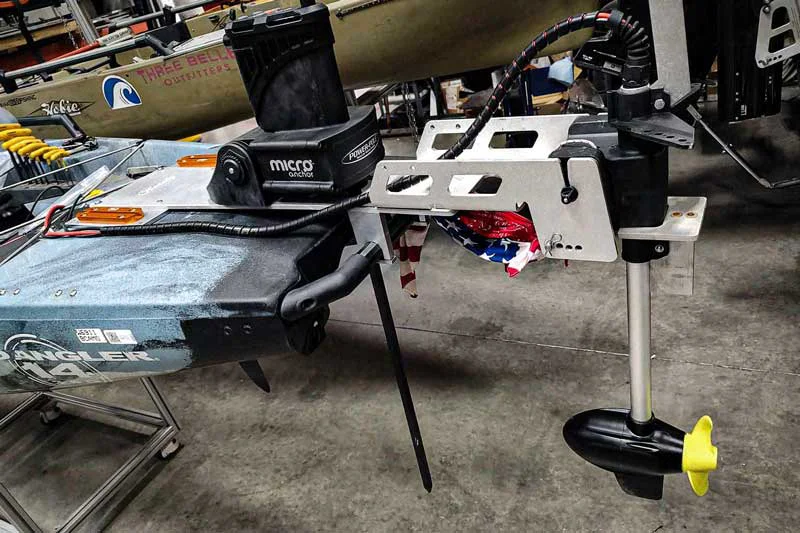
Two Electric Motors Are Not Our Default Recommendation
It is tempting to install a stern motor for travel and a bow motor for control. Before doing that, account for the complete system: both motors, mounts, batteries, controls, and the electronics you already carry. Battery capacity and weight can become the limiting factors. Installing two motors does not automatically double energy consumption, but building enough capacity for the way you intend to use them can create a much heavier and more complicated kayak. For an angler who genuinely needs separate travel and positioning systems, we would be more inclined to evaluate a small gas outboard paired with a bow-mounted electric motor on a platform specifically rated for that arrangement. That is a specialized build, subject to the kayak’s limits and the rules of the waters and events you fish. For most anglers, choosing one motor arrangement that matches the majority of their fishing is a better place to start.Choose Around Your Typical Fishing Day
If speed, river fishing, and suitable shallow-water operation lead your priorities, start by evaluating stern-mounted systems. If you fish inland lakes and want to hold offshore targets, make tight positioning adjustments, and control your casting angle, start with a bow mount. If you want stern mounting with GPS positioning, include the Garmin Force Current in the comparison. Then check the complete installation against your kayak, your battery plan, and your budget. Before ordering a motor, describe a normal fishing day: where you launch, how you travel, how you fish once you arrive, and what you need for the return trip. That description will help you choose more effectively than a top-speed claim or thrust rating by itself.